
Markgräflerland
True to its values, self-confident and cosmopolitan
The Markgräflerland presents itself as modern and open to inspiration. Its unique microclimate has shaped its century-old tradition of viticulture.
Based on a history of traditions, but open for change, the Markgräflerland exhibits an attentive curiosity that has always been inspired by its position within the triborder area and its guests that come from all over the world.
A lot of sun, moderate rainfall and warm winds from the South-West that drift through the Belfort Gap into the Upper Rhine Valley characterize the climate of the Markgräflerland. Already the Romans appreciated its sun and geographic location. On their way across the Alpes, they brought vines along, planted them at the green slopes of today’s southern Baden and thus established its century-old tradition of viticulture.
Today, the Markgräflerland presents itself justifiably self-confident: securely based within its long history yet open for innovation. This same philosophy can also be witnessed at Lämmlin-Schindler, who are always in harmony with its natural environment, with the soil and the knowledge about which varieties will bring along a supplement and enhancement of quality.
Terroir - Tasting the Soil in the Wine
Allowing the characteristics of the soil to resonate with the wine requires a sound knowledge of the special characteristics and potentials of the individual grape varieties and their sites.
The skills of the winemaker and his or her unique style make it possible to taste the soil on which the grapes grew
in the wine.
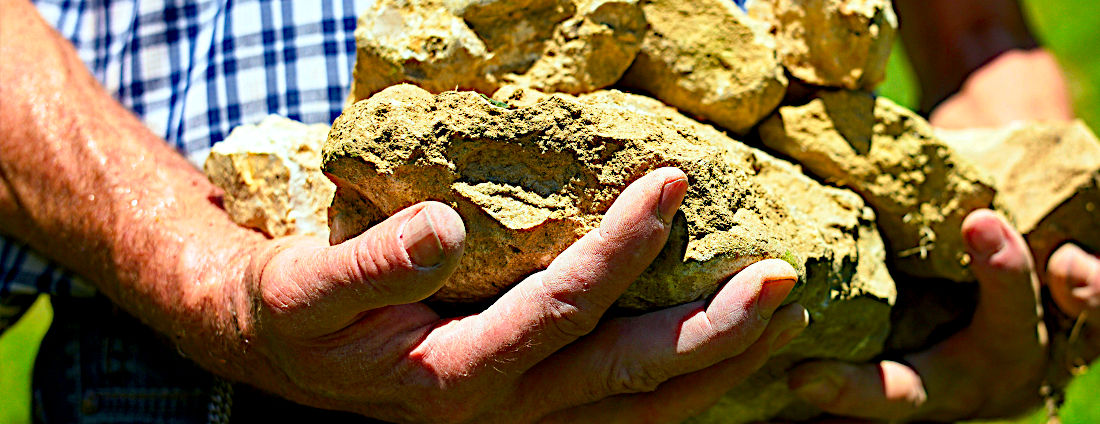
In the foothills of the Markgräflerland, the grapes meet with moderate winds, warm days and cool nights which together will later give a racy fruit acid to the wine. This fruitiness constitutes a large part of its unique aroma. The loess-loam soils that are so rich in minerals deliver the necessary energy, while the large amount of Jurassic limestone combined with the mild climate of this region, an outstanding soil variety and the skills of Gerd Schindler give Lämmlin-Schindler’s wines a unique materiality and elegance.
Every vineyard is unique: Depending on its composition in combination with its specific slope inclination, its capacity to store water and the radiation of the sun, the soil is predestined for different grapes. Based on the experiences of numerous generations, Gerd Schindler can determine exactly what potential the respective sites have. Gewürztraminer, Sauvignon Blanc or Merlot, for example, which grow better on rather permeable soil, can tolerate more dry periods that Gutedel.
Sites - Wines with character
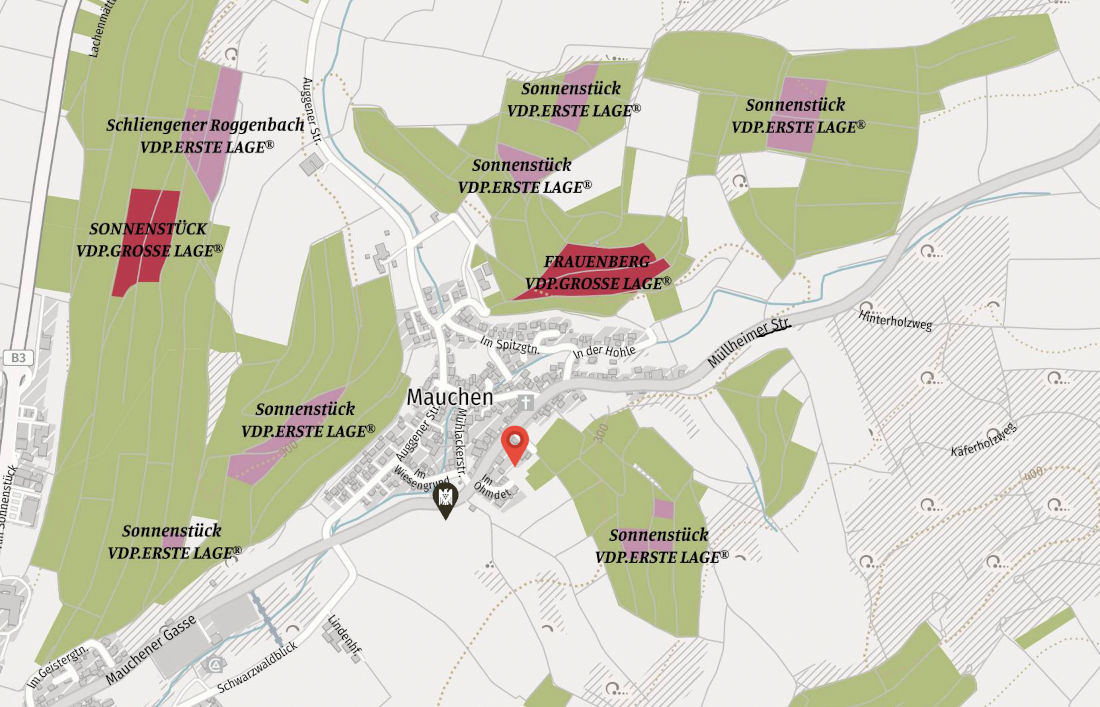
Two VDP-classified sites and five "Gewanne" on 20 hectars of land – this is where Lämmlin-Schindler's wine grows, the estate wine as well as Die Grossen Gewächse.
Mauchener Frauenberg – VDP.GROSSE LAGE®
The trophy site of the Lämmin-Schindler estate is characterized by loess, rock that has been grained into fine sediment during the last Ice Age. Not only is it rich in minerals, but it also has a great ability to store water, the elixir of life.
The basis of Jurassic limestone with nagelfluh combined with clay, which is unusual for this region, makes this site so special. Here, facing south-southwest and tilting towards the village, die Großen Gewächse of the Lämmlin-Schindler estate grow.
"This site grows red wines as I like them: savoury, with a pleasant mouthfeel and presence on the palate!" (Gerd Schindler)
Mauchener Sonnenstück – VDP.ERSTE LAGE®
A large part of the Mauchener Sonnenstück is characterized by steep slopes. Due to its location within a small side valley that is protected by surrounding woodland and its medium-hard, calcacerous loess-loam soil, it offers superb conditions for the cultivation of red wine. Here Lämmlin-Schindler grows its ruby red, powerfully fruity and aromatically rich Spätburgunder.